Tuesday, September 23, 2014
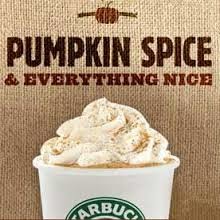
Hold that PSL...(Pumpkin Spice Latte)
I recently heard a joke that went something like this. "How can you tell it's fall in Southern California?" Punchline? "By the appearance of pumpkin spice lattes."
Wherever you happen to live, a sweetened spiced drink with pumpkin pie spices has become a harbinger of autumn, along with sweaters, football games, and turning leaves. (Those of us in L.A. can stick with two of the three.)
But is that pumpkin spice latte healthier than a hefty slice of pumpkin pie? What about if you order it "skinny" with nonfat or skimmed milk?
What's really in that pumpkin spiced drink, hot or iced?
Starbuck's Grande Pumpkin Spice Latte with Nonfat Milk, No Whip has 260 calories and 48 g of sugar. Add whipped cream for a total of 330 calories, 50 g sugar. Two percent milk with whipped cream brings the drink to 380 calories, 49 grams sugar, a pretty caloric snack.
And let's talk sugar. The American Heart Association recommends added sugar consumption be limited to no more than 25 g per day for women, 37.5 g per day for men. A study published in the Journal of the American Medical Association (JAMA) concluded the risk of dying from cardiovascular disease was 38% higher in people who consumed 17-21 percent of their calories in sugar. For those who typically consume over 21% of their daily calories in sugar, the risk doubles.
Excess sugar consumption is also indicated in increased risk for diabetes, metabolic syndrome, various cancers, and obesity, along with a host of other medical issues.
As I've cited in previous posts, hidden sugar in processed foods such as marinara sauce, salad dressings, and condiments can easily add up to that 25 grams. Add in those 48 grams from your afternoon drink and your sugar count has doubled and then some.
Sugar is not the only red flag in Starbucks and other coffee shops' spiced or caramel flavored coffee drinks. Starbucks flavored syrup ingredient list includes "Caramel Coloring" and the preservative "Sodium Benzoate."
Caramel coloring is added to Coca Cola, Pepsi, processed foods and drinks, soley to add color to a food or drink. The Center for Science in the Public Interest (CSPI) has appealed to the FDA to ban the use of caramel coloring in food and beverage products because caramel coloring contains two cancer-causing chemicals, one of which is 4-MI.
For a quick chemistry lesson without the Bunsen burners, caramel coloring is manufactured by applying very high heat to food grade sweeteners, including dextrose, invert sugar, lactose, malt syrup, starch hydrolysate, and sucrose. This processing method results in carcinogens.
Remember in Chemistry 101 when you learned about the possible combustible interactions between different forms of matter or chemicals? Caramel coloring when paired with Sodium Benzoate, as in most colas and yes, Starbucks Syrup, is bad news.
The dynamic duo may increase hyperactivity in children. And when Sodium Benzoate is heated, like in your afternoon flavored latte, the chemical is converted to benzene, a particularly toxic chemical well-cited to cause damage to DNA and a well-documented carcinogen.
So, instead of indulging in that cozy autumnal drink, maybe whip up a smoothie with canned pumpin, some cinnamon and nutmeg. You'll get Vitamin A and the anti-inflammatory properties of cinnamon without the excess sugar or carcinogen super-pack.
Monday, September 8, 2014
Helicopter Dieting
The Washington Post's Amy Joyce wrote an article earlier this month detailing "How helicopter parents are ruining college students." As a mother of two daughters, starting their freshman years in college and high school, I've observed more than a fair share of hovercraft parenting, as common in suburban America as SUVs and soccer games.
Over parenting is hardly a new issue effecting baby boomers and their millennial progeny. As long as I can remember, there have been parents who sort of adopt the LAPD's motto to "Protect and Serve," swooping down to pick up a toddler to avoid a scraped knee or calling a teacher when little Britney gets a "B." As much as it pains parents to see our babies hurt or struggling, we need to guide kids to confidence to make healthy choices and decisions.
Since this is a nutrition blog, I wanted to address another form of what I see as an especially harmful practice, what I'll call "helicopter dieting."
Though we are experiencing an unprecedented upswing in childhood obesity, I'd like to talk about the flip side. For every kid who is seriously overweight, there are probably one or two mothers pushing diets on their younger daughters. Sure, none of us want our children to face potential health risks, teasing, or other consequences of a few extra pounds during childhood or adolescence. We'd all be happier if our kids chose kale and quinoa over cupcakes and cheese puffs. One of our jobs as parents is to model healthier food choices. But, there's a fine line between encouraging your kids to eat more greens and adopting the role of Food or Body Image Police.
When we show our daughters we are uncomfortable with our bodies, jumping from one restrictive diet program to another or make disparaging remarks about our own bodies in front of our kids, we pretty much lead them straight into a life marked by compulsive dieting and body image issues.
And when we make the decision or encourage our daughters to follow an overly restrictive food program, we just douse that flame with oil till it becomes a five alarm fire.
A study by the Keep It Real campaign, a joint effort between Miss Representation, the SPARK Movement, Love Social, Endangered Bodies, and I Am That Girl concluded that 8 in 10 ten year old girls have been on a diet. The study also reported that the number one wish for girls 11-17 was to be thinner.
We can blame the media. We can point fingers at Seventh Avenue and Hollywood where models and actresses shrink to resemble ten year old boys with curves. And though the constant attention on weight loss and who's skinny --and who's not -- certainly impacts our daughters (and ourselves), we also need to look closer to home.
When we make food into a control issue, we open a whole set of issues, whether we are demanding a toddler finish his broccoli before he leaves the table or gets dessert or asking a 13-year old if she "really needs that second piece of pizza."
The same thing goes for dragging a seven-year old or even a teen to Weight Watchers or putting everyone on Paleo.
We need to focus on eating foods that serve our bodies with wiggle room to enjoy a slice of birthday cake or a favorite restaurant meal. And that is just the message we need to give our daughters (and sons.)
Encourage daughters to participate in a physical activity they enjoy instead of putting the focus on burning calories. Change can only happen when we respect and love our bodies.
That goes for ourselves and our children.
Monday, September 1, 2014
Notes from the Single Mom's Half-Empty Nest
This week, I’m dropping my first born at college. I’m so excited for her new life, as she is posed to launch towards her promising future, reaching and even exceeding her dreams. I am proud she has a true sense of herself. She is not trying to please everyone around her like I spent most of my life doing. I do have to pat myself on the back for getting one child on her way to independence.
This week, my younger daughter struggles with picking me up at the airport or going to the first high school football game with her friends. She has chosen the latter. I am relieved she is a healthy teen. Younger kids of single mothers often feel guilt about leaving their moms at home.
I’ve always considered myself an independent woman. I’ve always been on my own, even during my marriage. I’m used to the quiet weekends when I have no plans and am at home with my laptop and a bowl of air popcorn for dinner when my kids are at their dad’s or with friends.
Yet, tonight when my daughter told me she’s having dinner with her new suite mates, part of me did a little victory dance. She’s on her way! But the other part of me fought back tears.
For most women with children, the shift from being needed as a mother to being sort of a useful accessory is rough going. We need to redefine our roles.
For couples with a healthy marriage, empty nest means time to reconnect with each other in a new way. For single parents, there’s this pervasive loneliness that comes from the process. For most mothers, there’s a shift in how we see ourselves.
I’ve never felt parenthood defined me. I love my children beyond what I could have imagined but have always needed to pursue outside interests to feel whole. And I am grateful for that because I don’t even know how I’d manage if I had been one of those career moms who sacrificed her individuality at the altar of Mom.
So, what can single mothers do when the kids are about to soar away? If we are unhappy with our careers or have no career, we need to figure out how to rekindle our dreams. We need to feel okay being alone. Maybe we will never find love in the form of another person. That’s okay as long as we love ourselves.
We can find new hobbies and reacquaint ourselves with the old. Pick up a paintbrush. Practice yoga. Take a class.
As with every experience, we need to focus on expressing gratitude for what we have rather than what we are missing. We were fortunate to have had our children in our midst for 17 or 18 years and it’s time to let them soar. As a friend used to say to me, “Your job as a parent is not to raise children but to raise adults.” So, if you are sending off a child to college, congratulate yourself for a job well done.
And remember, Thanksgiving will be here before you know it!
Sunday, August 17, 2014
Vacation Hold: Exploring Local Foods
Summer vacation. Whether you're logging air miles, cruising exotic locales, or taking a road trip, you likely know the regimen. Drink plenty of water. Pack a healthy sandwich, fruit, salad, almonds. "On behalf of your crew, we thank you for flying with us today. We hope you have a great day in the ? area, or wherever your final destination may be."
But, what about when you arrive? Do you eschew local delicacies in favor of carrying Ziploc bags of nuts and seeds? Order a dry chicken breast and some steamed broccoli instead of trying the deep dish pizza off Michigan Avenue or soupe à l'oignon in a Parisian bistro?
Sampling the local cuisine or specialties is an essential part of travel. But, an extra five or ten pounds do not have to be among your souvenirs if you indulge mindfully. Just like at home, choose your indulgences with thought. Do you really want that Frappucino at Starbucks or the "freshly baked chocolate chip cookie" in the hotel lobby?
Balance is key. Borrowing from Michael Pollan, "Eat food. Mostly plants. Not too much." Try some local fruits or vegetables. I will always remember this perfect strawberry I once ate from a farmers market in Amsterdam. Stop at one glass of wine. Don't dig into the bread basket unless we're talking
Poilâne on the Left Bank or Marais or sourdough at San Francisco's Fisherman's Wharf. Split a dessert if you're still hungry. Choose a couple of appetizers or soup and a salad instead of a full entree.
Get plenty of exercise by walking through local neighborhoods, choosing a physical activity like kayaking or bike riding, or hit the hotel or cruise ship gym for a class or workout.
When we toss aside balanced eating for a week or two of binges, it's easy to get off track. We feel guilt for overindulging until our eating spirals out of control. You'll feel more energetic if you choose healthy, well-prepared foods between the Balboa Bars, macarons, fried chicken and a biscuit at Nashville's Loveless Cafe, Texas barbecue, a slice at Patsy's Pizzeria in the Big Apple.
As a foodie, I browse through Gayot or local food blogs to find the best restaurants or delicacies in each city I visit. Fully experience each meal or food you try. Take your time. Journal about your favorite foods.
Bon Appetit! And stay away from the Deep Fried Food on a Stick at the County Fair!
Friday, July 25, 2014
That Nightly Glass or Three of Wine
Gather a group of women the French refer to as "of a certain age" together and the beverage poured will invariably be a full bodied Cabernet or crisp Pinot Grigio. According to several wine marketing agencies, in 2013, women purchased 55% of wine with baby boomers spending the most.
A Facebook group (and website) called Moms Who Love Wine has close to 700,000 likes.
Zazzle and Cafe Press sell a variety of tee shirts with images of wine glasses and slogans like "At My Age, I Need Glasses" or "Grandma's Sippy Cup."
Wine is much more socially acceptable than a vodka tonic or martini, dirty, two olives. Book clubs don't often enjoy a pitcher of margaritas along with the fro yo. Forty- to sixty-something women probably gather for wine tastings more often than at a whiskey bar.
You've no doubt heard of the French Paradox or the benefits of that nightly Cab or Merlot. Lots of chatter about resveratrol, an antioxidant found in the skins of red grapes. Since red wine is fermented with the skins, that glass of Pinot contains more resveratrol than your friend's Pinot Grigio.
Studies on lab mice have concluded positive cardiovascular benefits from the antioxidant, including an increase in high density lipoprotein (HDL or the "good cholesterol") and protection against artery damage. However, resveratrol is present in non-alcoholic sources like blueberries, grapes, and cranberries.
What is the risk vs. reward of that nightly Merlot? And what happens when that nightly glass is now half a bottle? Does frequent wine consumption pose a health risk for women at midlife?
Neither the American Heart Association nor the National Heart, Lung, and Blood Institute recommend adding wine to your daily routine to increase HDL. Andrew Weil, MD suggests moderate red wine consumption, green tea, and dark chocolate may have beneficial effects on cardiac health. But moderate is the operative word.
As defined in the Dietary Guidelines for Americans, moderate alcohol consumption is one 5-ounce glass of wine, 1.5 ounces of hard liquor, or one 12-ounce beer per day. A bottle of wine would hold approximately seven glasses of five-ounce pours.
When we swing the consumption upward of that recommended limit, we may face a number of serious risks. Almost half of all liver disease can be attributed to cirrhosis of the liver. One in three liver transplants in the U.S. is due to alcohol related liver disease. Excessive alcohol consumption may raise the risk of a number of cancers including mouth, esophogus, larynx, pharynx, liver, and breast.
Alcohol usage may pose other risks including high blood pressure, increased triglycerides, obesity, and accidents. Over time, more than moderate consumption may lead to cardiomyopathy (stretched and weakened cardiac muscle), steatosis (fatty liver disease,) alcoholic hepatitis, pancreatitis, and surpressed immune system, according to the National Institute of Alcohol Abuse and Alcoholism.
A five-ounce glass of wine has approximately 124 calories. However, the effect of alcohol consumptoin on metabolism is not as simple as that. According to Dr. Pam M. Peeke, author of "The Hunger Fix," our bodies are unable to store calories from alcohol like we do with excess food. So, our bodies turn off the metabolic switch on that lunchtime Caesar salad or more likely, cheese plate. Peeke adds research has shown that alcohol may actually decrease abdominal fat burn, that pesky area most of us fight as we progress through the menopause cycle.
A daily glass of wine, if we balance our calories from other sources, probably won't cause catastrophic results unless we are pregnant or combine with a number of prescription and non-presciption medications. Alcohol can decrease the effect of certain medications like antibiotics and anticoagulents like Coumadin. According to the NIAAA, at least 25% of all emergency room visits can be attributed to alcohol/medication interactions. Antidepressants, antidiabetic medication, anti-psychotic and anti-seizure medications, narcotic and non-narcotic pain relievers, and other medications may cause dangerous interactions with alcohol. Following that aspirin you take to for your heart with a glass or two of wine may lead to a risk of gastric bleeding. Tylenol plus alcohol can put you at risk for liver damage.
So, should you stop that nightly glass of wine? One glass of red wine may bring some health benefits.
But, like everything, moderation.
Monday, June 23, 2014
V B 6: Plant-Based Days; Flexitarian Nights
Have you tried to host a dinner party lately? Or find a restaurant option to accommodate everyone's dietary needs?
Bread and pasta to Paleo Jane are like garlic to a vampire.
Dave is following Forks to Knives. Bring on the quinoa.
Is there a way to eat plant-based most of the time but still enjoy occasional pizza, Chicken under a Brick, or seared ahi?
When food writer Mark Bittman of The New York Times was presented the option of a pharmaceutical regimen or going vegan to change his pre-diabetic status and high LDL/low HDL, neither option appealed to him. The author of How to Cook Anything and its multitude of variations decided to come up with a food program that would serve his health and environmental concerns while leaving wiggle room to enjoy New York's delicacies and restaurants.
Bittman would eat a plant-based diet, eschewing sugar, processed foods, and white carbs till 6 pm. The dinner hour could feature a porterhouse at Peter Luger, slice of Ray's pizza, or the tasting menu at Bouley.
The writer lost weight and experienced a notable improvement in his blood glucose and LDL levels.
Fifteen years, later, he has held his own.
His book VB6 and The V Before 6 Cookbook present a blueprint for this lifestyle change.
As a fit foodie, I was curious enough to One-Click Order both titles on Amazon. If you're a regular reader of my blog, you'll know I stopped "diets" years ago but for environmental reasons and to support my health, I was looking for a way to bridge the gap between living on kale and reviewing L.A.'s hottest restaurants for a magazine.
I had been a practicing pescatarian and/or vegetarian on and off since I was a teen. About six months ago when I donated a kidney, I began to crave an occasional chicken breast or steak. I wasn't ready to give up half and half in my daily coffee or Buratta with Grilled Peaches.
Still, I worried about the impact of our increased protein consumption on greenhouse gases and the inefficient use of grains as animal feed. So many fish species are on the endangered list. Farmed seafood may be rife with antibiotics and contaminants like PCBs and mercury.
The 20-year China Study, conducted by Cornell and Oxford Universities and the Chinese Academy of Preventative Medicine concluded that the Standard American Diet was excessively high in animal protein and unhealthy fats while low in fiber, which contributes to a much higher incidence of obesity and chronic medical issues including cardiovascular disease, diabetes, and hypertension. A plant-based diet, according to Dr. Dean Ornish of the nonprofit Preventative Medicine Institute, can possibly reverse heart disease. A diet high in animal protein contributes to inflammation, which is at the root of many diseases like cancer, cardiovascular disease, and autoimmune diseases. Increased animal protein consumption has also been linked to kidney disease.
Any restrictive dietary program, however, may be challenging to keep up, barring high risk for disease. How can we focus our diets on plants, high in fiber, antioxidants, vitamins, and minerals while leaving a little wiggle room for epicurean delights?
VB6: Eat Vegan Before 6:00 to Lose Weight and Restore Your Health . . . For Good presents a plan based on plant-based whole foods before 6. The dinner hour is essentially flexitarian.
Like most lifestyle changes, VB6 is based on a few "rules," as follows.
1. Eat fruits, vegetables, and whole grains during the day. Feast on salads, vegetable dishes, oatmeal, fruit, beans, legumes.
2. After 6, your food choices are more flexible. There's no scientific reason behind the 6:00 hour. This just shortens the window of opportunity to indulge in a steak, pasta, pizza, pick your poison.
3. Avoid processed foods, sugar, and white carbs. During the day, avoid that bagel, croissant, cupcake, pasta, ice cream, baguette. By now, we all know to avoid processed foods and sugar. Yet, the temptation to indulge may be hard to resist. VB6 gives you some wiggle room.l
In the week since I've been following the VB6 rules, I have not always ended my day with a cocktail, steak, pasta, or dessert. Some nights, I've stuck by my plant-based regimen. But, when I have dinner plans or just crave a turkey burger, I know it's not off limits. Knowing I have the option makes staying the course much easier.
My favorite pair of food gurus, Bittman and Michael Pollan, have it right.
As Pollan has said, "Eat Food. Not Too Much. Mostly Plants."
Whether you choose to go plant-based before 6 or "do the dinosaur" ie Paleo, choose whole foods and restrict sugar and processed foods. Vegetarians who select faux soy-based chicken tenders and burgers may not be healthier than meat-eaters who include an arugula salad and some broccoli with their beef or chicken.
Much of following a healthy lifestyle is common sense.
Sunday, May 25, 2014
'Fed Up": Is Exercise Part of the Weight Loss Equation?
"Fed Up," the latest documentary about nutrition, dietary theories, and food politics makes a case for the risks of a diet high in sugar and processed foods. If you've been reading my blog posts, you'll know I support staying clear of sugars and artificial sweeteners found in all processed foods.
But, it's a second idea put forth in this documentary that troubles me.
The idea that the calorie deficit equation or calories in vs. calories out does not work.
Weight loss is not a simple task. If it were, we could figure out our resting metabolic rate or energy it takes for our particular body to just survive. We could subtract 3500 calories per week or balance with calories burned on the treadmill or in spin class and lose about a pound a week.
Does this work? Yes... and no.
And, more importantly, if we cannot burn calories to lose weight or body fat, does this mean we get a free pass to avoid the gym or physical activity?
Let's start by addressing the first part of the equation, calories in. As much as the food processors and marketers would like you to believe, all calories are not equal. The human body is designed to maintain a state of homeostatis or balance in order to survive. This means we need a particular balance of macro- and micronutrients, enzymes, water to function. If we do not feed our bodies what we need, we will experience cravings, eating an indefinite amount of excess calories.
In other words, man cannot live on bread, or In & Out, or Lean Cuisines or fro yo, or power bars alone.
Think of your body like a very expensive, fine-tuned engine. More Maserati or Ferrari than Hyundai. Car enthusiasts use premium gas to ensure their wheels run smoothly. You'd never dump a bowl of sugar under the hood and pray for the best.
Feed your body whole foods, lean proteins (primarily plant-based), fruits and vegetables, actual whole grains like brown rice rather than some Franken-fiberized "whole grain" fluffy hamburger bun or chips. Include healthy fats like Omega-3s and even some saturated fats found in coconut oil. Eat when you are hungry. Stop when you're full. Listen to your body, even if that means you must get reaquainted with the feeling of hunger and fullness. Be present when you eat.
So, if you do switch to a "clean" diet, should you eschew exercise for watching "The Bachelorette" on the couch or pressing the snooze bar a few more times?
If we look at exercise as only part of the calories burned paradigm, we'd need to log sixty minutes on the treadmill just to cover that bowl of cereal with milk. The focus on calories burned is a pretty ineffective tool for weight control.
I spent most of my adult years as a compulsive dieter and calorie torcher. But even during my calorie counting mania, I enjoyed exercise classes for the feeling I'd experience during and after a sweaty class, perhaps even more than the promise of a few pounds burned each month.
Exercise is so much more than a tool to burn extra calories or lose a few pounds. Our bodies are designed for movement. Since our daily lives don't involve chasing after our food or being chased by a dinosaur or other threat, we live rather sedentary lifestyles.
We need a combination of cardio (exercise that raises our heart rate), resistance training to build and maintain muscle and bone mass. And stretching for flexibility. I haven't even mentioned the psychological and stress-releasing benefits.
As we age, we lose muscle mass. When we don't feed our bodies the right balance of protein, fats, carbs, we pull from muscle mass to feed our bodies, just like if our diets don't include enough calcium, our bodies pull from our bone mass. Dieting alone without exercise will accelerate loss of muscle. And when we lose muscle mass, our resting metabolic rate decreases.
Resistance training, with weights, machines, or our own body resistance, helps preserve muscle mass so for hours after your barre or yoga class or hour at the gym, your metabolic rate is still increased.
When we practice mind/body exercise like yoga or barre or Pilates, we become more in tune with our bodies and needs. Since I switched up most of my workouts to yoga and barre, I have found I am much more aware of actual hunger and what I want to eat. If you've spent a few hours exercising, you are likely not running out to grab a double double or the rest of that box of cookies in your cabinet.
Most of us live hectic, hurried, stressful lives in with little downtime. We aren't present because we are tethered to our i Phones or smart phones, panicked without WiFi access. The seductive temptation of a cupcake or some other fat/sugar double whammy is alluring when we are exhausted, facing work deadlines, have to bring the kids to soccer, and hoping to have a healthy dinner on the table.
Lots of women have shared with me they are unable to resist the call of a midafternoon dessert, frozen yogurt with toppings, or an iced blended mocha. Sugar lights up the same receptors in our brain that cocaine and other drugs light up. And sweets bring us back to our childhood.
Switch out the afternoon treat with a walk with a friend. Throw in an exercise tape. Take a class. The endorphin rush you'll get from a workout relieves stress and makes you feel better about yourself.
Subscribe to:
Posts (Atom)


